



Before01
Company profile
- Hand-written rounds
- Fragmented records
- Limited MES visibility
AUTONOMOUS
A digital twin that connects the physical and the virtual
SYSTEM ARCHITECTURE
Visualization, data/model, transport and physical — four layers connected as one data flow.
04
Digital twin visualization
Visualization Layer
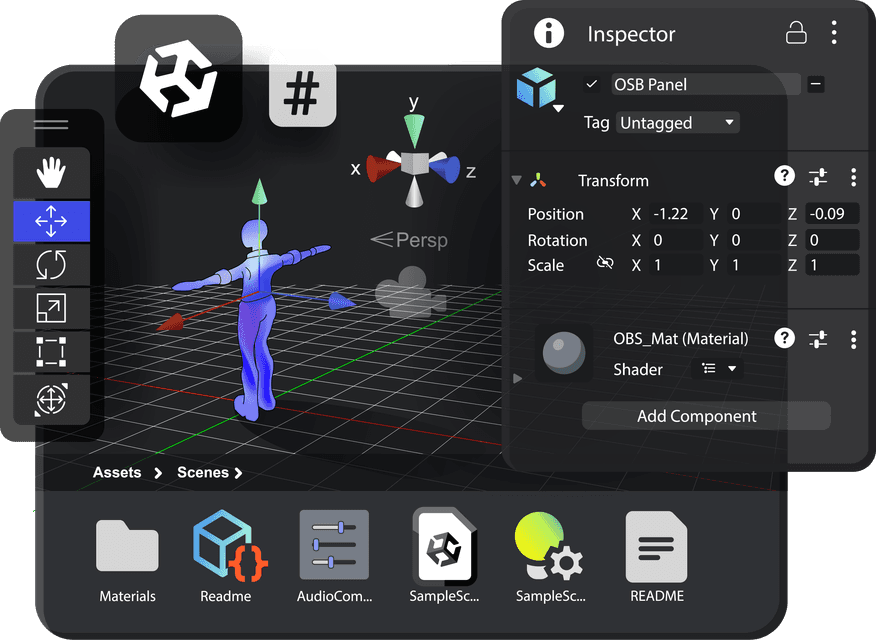
3D build · twin capabilities
3D Visualization



Entity Mapping
Rendering Pipeline
(HDRP)
Data Connector
(C# Scripts)
Texture Atlas
ML-Agents
Digital Twin
03
Data / model layer
Data & Model Layer
Collect · store · link · analyze
Data collection
OPC-UA collection
NODE → SubmodelElement semantic tags applied automatically
IoT collection
Live state values bound in
Data storage
AASX package
JSON serialization
Version and history
Submodel version tags / LifeCycle state tracking
Data integration
AAS Registry
Supports enterprise-wide resource integration
API Gateway
REST API interface
Analytics / AI models
Digital twin model engine
Unity / syncs physical state with the virtual model
AI / ML submodels
Prediction and anomaly models registered
02
Transport layer
Transport Layer
Standardization · validation · encryption
OPC-UA based integration interface
01
Physical layer
Physical Layer
Control · robots · identification · sensors
Equipment controllers
PLC
Production equipment
CNC
Machine tools
Robots
Cobot
Industrial robot
AGV / AMR
Identification
Barcode
RFID
Machine vision
IoT sensors
Power meter
Temperature/humidity sensor
Vibration sensor
PROCESS
Four stages, from data collection and infrastructure through model development and integration testing to rollout.


EFFECT
What a digital twin leaves behind — in output, defect rate, working environment and cost.
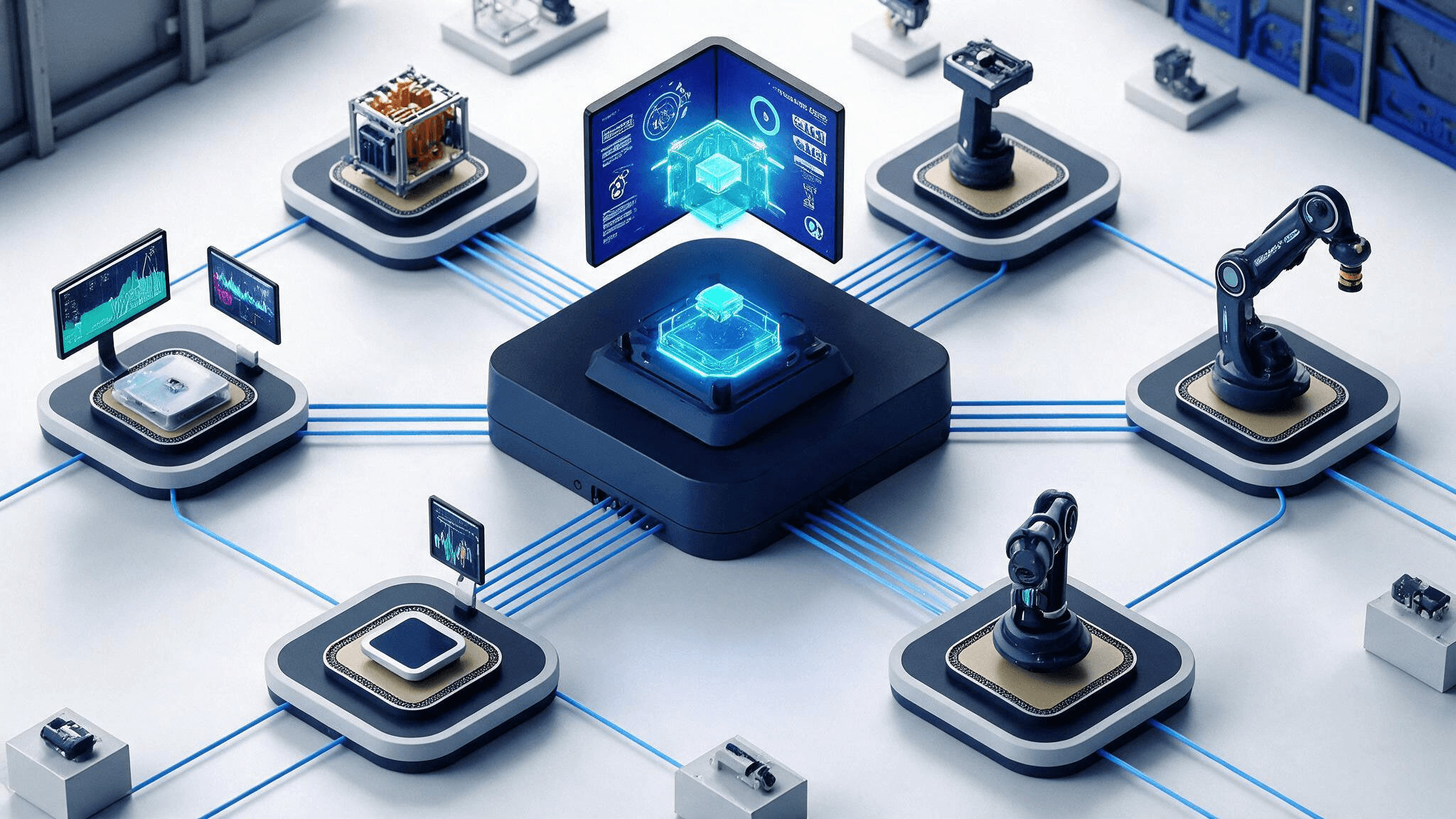
Higher output
Running 24/365 without interruption and handling tasks far faster than a person does, cutting processing time.
Fewer defects
Sensor data raises an alert the moment something drifts, and past data plus the virtual environment explain the cause so the same mistake does not repeat.
A better working environment
Hazards in the areas people work in are simulated to raise safety, and emergency scenarios are rehearsed to sharpen the safety manual.
Lower costs
AI reads each machine's energy consumption pattern to strip out waste, and optimal work paths and process order cut labor and logistics cost.
CASE STUDY
A factory rebuilt virtually, with power data linked in and carried through to predictive maintenance.
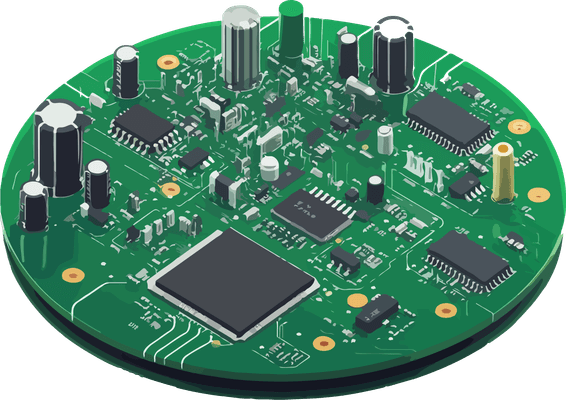
Customer industry
Printed circuit board (PCB) manufacturing
Before01
After02
Results
A digital twin that replaced manual rounds with live visibility