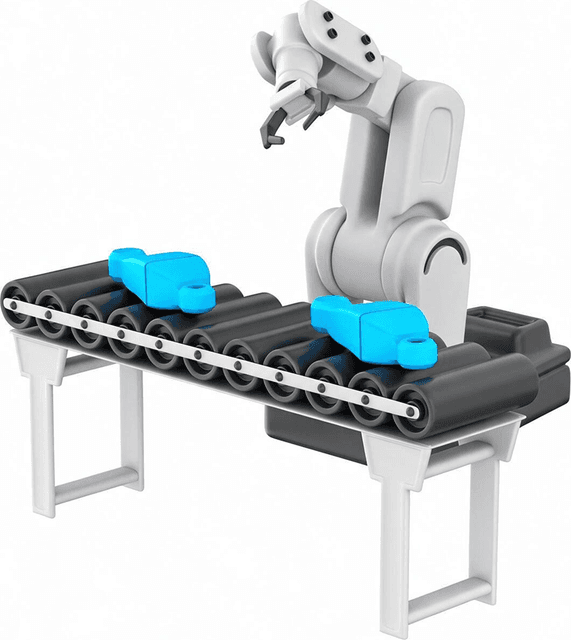




Before01
Company profile
- Manual part alignment
- Long setup times
- Repetition injury risk
AUTONOMOUS
Robotic process automation that transforms production
SYSTEM ARCHITECTURE
From the floor's equipment, sensors and robots to RPA, data collection and automatic execution joined in four layers.
04
RPA automation layer
Automation Layer
Orchestration · bot execution
ORCHESTRATOR (RPA CONTROLLER)
BOT/EXECUTION ENGINE
03
Execution layer
Execution Layer
Data · logic · interfaces
DATA MANAGEMENT
Live production DB
Run time, output, logs by process step
Quality DB
Pass/fail results, defect types, measurements
Material / stock master DB
Barcode/QR history, in-process stock
LOGIC & EVENT ENGINE
Production plan
Work orders and progress control
Event manager
Calls RPA when a condition is met
Rule engine
Judgment criteria and automation rules by process
INTERFACE LAYER
API/Web Service
Live link to MES, ERP and other systems
FTP/Shared Folder
Exchanging inspection results and log files
Dashboard alerts
Tells owners of anomalies and completions
AI/ML ENGINE
02
Transport layer
Transport Layer
Collection · instruction · standardization
OPC-UA-based unified interface
01
Field
Field Layer
Controllers · sensors · robots
CONTROLLERS
PLC
Production equipment
CNC
Machine tools
IOT & SENSOR
Machine vision
SENSOR
RFID
ROBOTS
Humanoid
Collaborative robot
Industrial robot
AGV / AMR
PROCESS
Four stages, from assessment and design through installation and validation to training and maintenance.



EFFECT
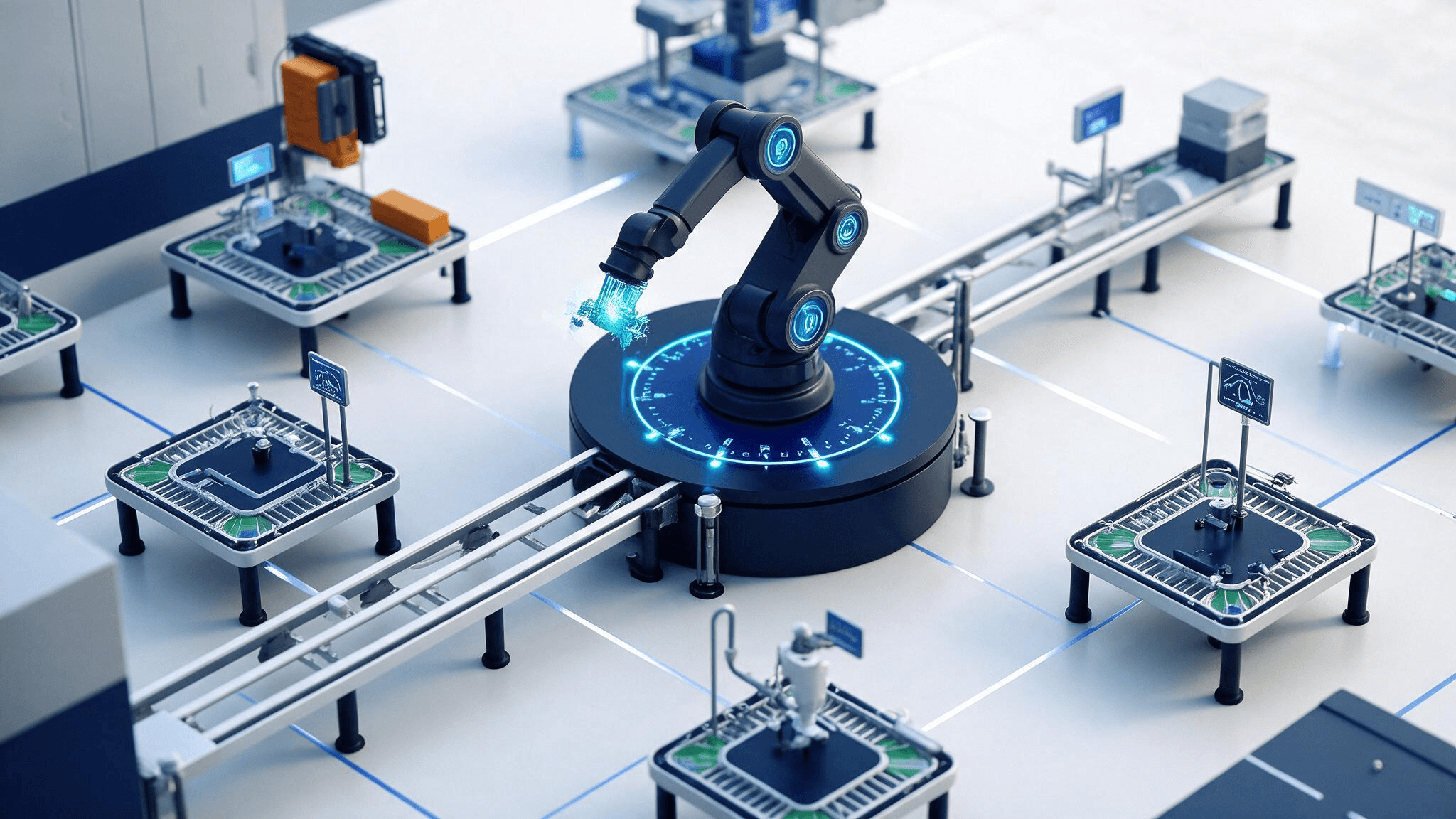
What the work handed to robots leaves behind — in output, quality, working environment and cost.
Higher output
Running 24/365 without interruption and handling tasks far faster than a person does, cutting processing time.
Better quality
Errors from manual and simple repetitive work are removed and variation is reduced, keeping quality consistent.
Improved working environment
Less stress and fatigue from repetitive work raises job satisfaction and widens the use of digital tools on the floor.
Cost reduction
Labor costs are streamlined and operating costs cut directly, with people redeployed to higher-value work such as planning and response.
CASE STUDY
A part-alignment process handed to robots, with shop-floor data linked to the MES in real time.
Customer industry
Precision cutting tool manufacturing
Before01
After02
Results
Robot automation that turned a manual alignment process into unattended operation