

Before01
Company overview
- Handwritten energy logs
- No per-machine data
- No basis for targets
DX Solution
An FEMS solution that transforms energy efficiency on the factory floor
ARCHITECTURE PROCESS
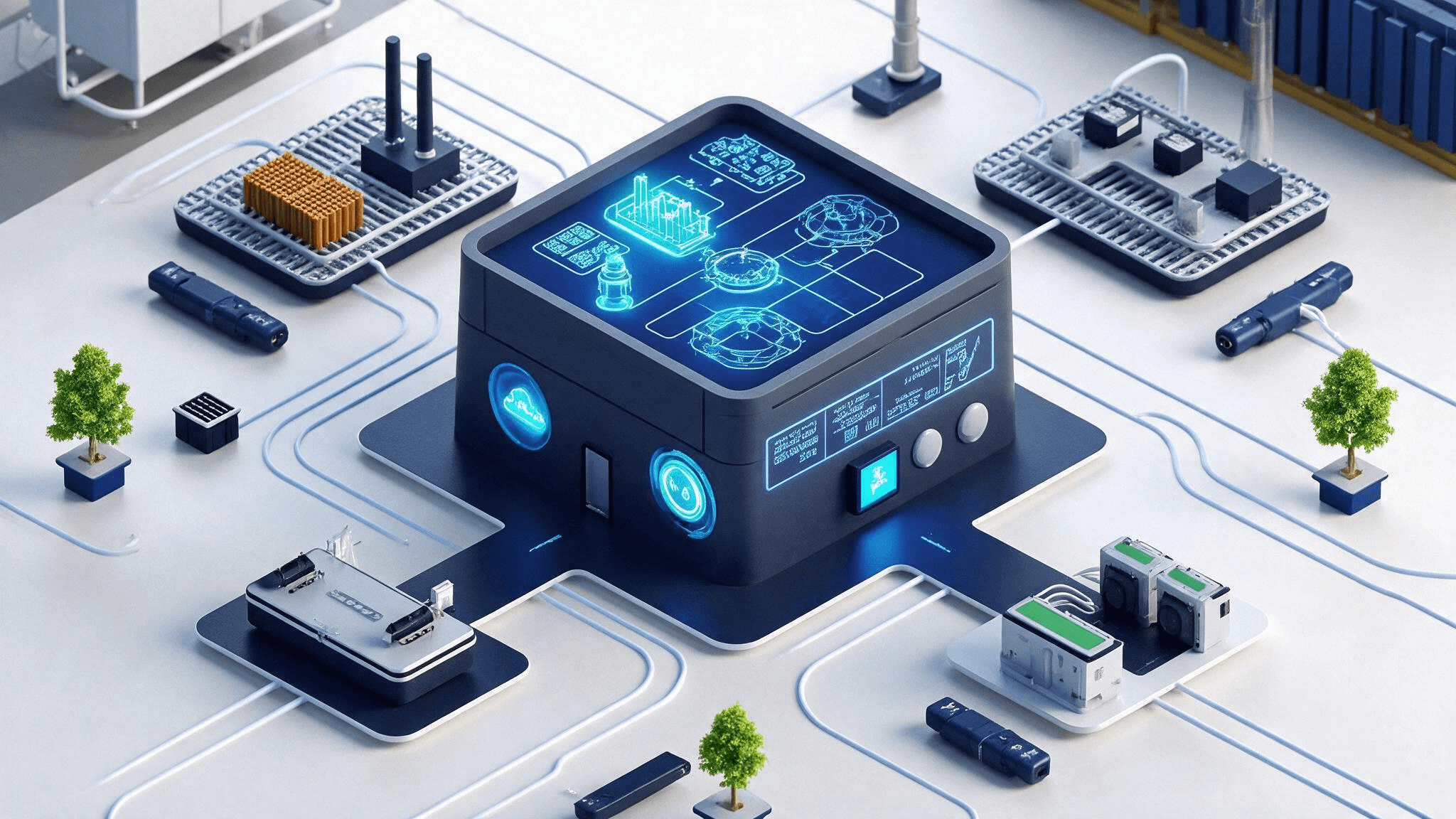
From site assessment through IoT infrastructure and commissioning, the energy management system is built up stage by stage.




EFFECT
Energy costs and carbon emissions come down together, while productivity and equipment operation improve.
BUSINESS OUTCOME
Lower energy costs
Real-time monitoring reveals consumption patterns so wasted electricity can be identified · Replacing and upgrading low-efficiency equipment cuts operating costs
Electricity use · Energy intensity · Operating cost
Higher output and quality
Linking energy and process data secures consistent quality and reduces the defect rate · Removing bottlenecks raises equipment utilisation and available output per production unit
Utilisation · Defect rate · Output per unit
Getting ahead of global environmental regulation
Accurate carbon accounting meets global supply-chain requirements and environmental regulation · Builds credibility and export competitiveness under regimes such as RE100 and CBAM
Carbon emissions · Renewable share · Compliance
Optimised equipment operation
Detecting anomalies in consumption patterns enables equipment failures to be predicted and pre-empted · Digitalises the plant's complex energy flows and applies automatic control logic
Anomalies detected · Preventive maintenance · Automated control
CASE STUDY
What FEMS solved at a real site, and what changed afterwards.
Customer industry
Flexible and printed circuit board manufacturing
Before01
After02
Outcomes
An FEMS that turns energy data into savings
From paying for what you used to cutting what you can see.
From metering points for power, water and gas through to carbon reporting — scoped to the size of your plant.
Talk to us